
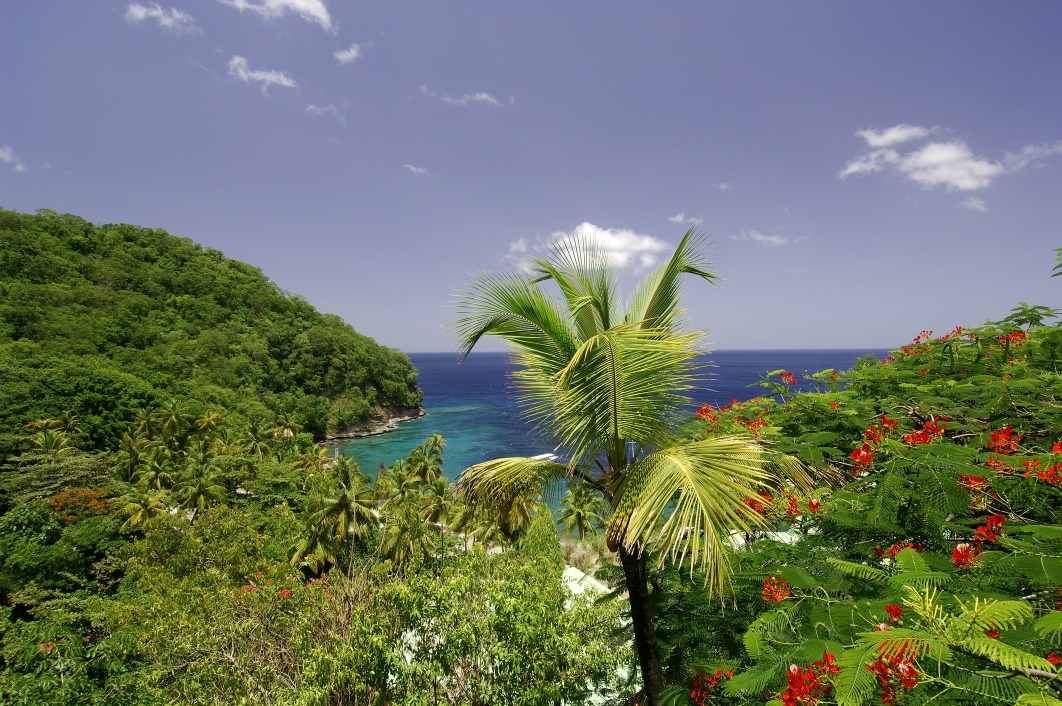
The first thing that will strike you about St Lucia is its sheer natural beauty as it is a picture postcard ideal of a Caribbean island. Not only will you be met with amazing pristine beaches, but also lush tropical rainforests. The first impression of St Lucia is of breathtaking scenery, an affable climate, and welcoming locals. The longer you stay on the island you are bound to only fall in love with every aspect of St Lucia.
On first sight, most visitors are completely taken aback by the picturesque Pitons, twin volcanic peaks that tower over the land and sea. Climbing to the top of these peaks is a popular and achievable activity. The warm Caribbean waters provide ample opportunity for scuba diving and windsurfing. The protected marine park near Soufriere is a world-class dive site, whilst the bay around Vieux Fort takes advantage of the trade winds for wind and kite surfing.
St Lucia has a great deal of high standard accommodation, built to Western resort standards, providing a suitably comfortable stay. Most of the resorts are in the north of the island, near the town of Gros Islet although there are several other places to stay in the southern end of the island near Soufriere and Vieux Fort. St Lucians are friendly hosts, and hospitality here is unbeatable.
The area around Soufriere is home to the famed Piton peaks, also sulfuric hot springs featuring a drive-in volcano, the only one in the world. Close to this is the hot spring baths, where visitors can soak in the medicinal mineral waters. The botanical gardens also provide a tranquil day out; those who visit can take a walk to the resident waterfall, Diamond Falls, taking in all the plant species along the way.
St Lucia is a tropical island with a hot, humid climate. Annual temperatures hover between 79°F and 90°F (although it feels cooler as the island experiences northeast trade winds) at sea level. Temperatures in the mountains are also cooler, averaging 55°F annually. Rainfall is around 80 inches, most of which falls between June and November - the wet season. December to May is the dry season, with less rain, and slightly cooler temperatures and is generally the most popular time for tourists to visit.
St Lucia has an international airport in Vieux Fort, in the south of the island. This airport receives direct flights from US, Canadian, and European destinations. From south to north of the island will take about an hour by taxi or car, although along the way you will be amazed by the scenery and beauty of St Lucia. Taxis are readily available to anywhere on the island, or renting a car is a good option in St Lucia as it is small and easy to navigate, with good roads.
Highlights
- Go diving in the warm tropical waters of the Caribbean
- Take advantage of the northwesterly trade winds that sweep the islands by going windsurfing
- Explore the rainforest in nature trails that cross the island
- Swim with leatherback turtles at Soufriere marine reserve
- Discover more about St Lucia’s rich past with a trip to one of the historical forts
- Perfect your swing with a trip to one of the island’s top golf courses
- Romance in the air? The tropical island of St Lucia makes an unforgettable wedding destination