
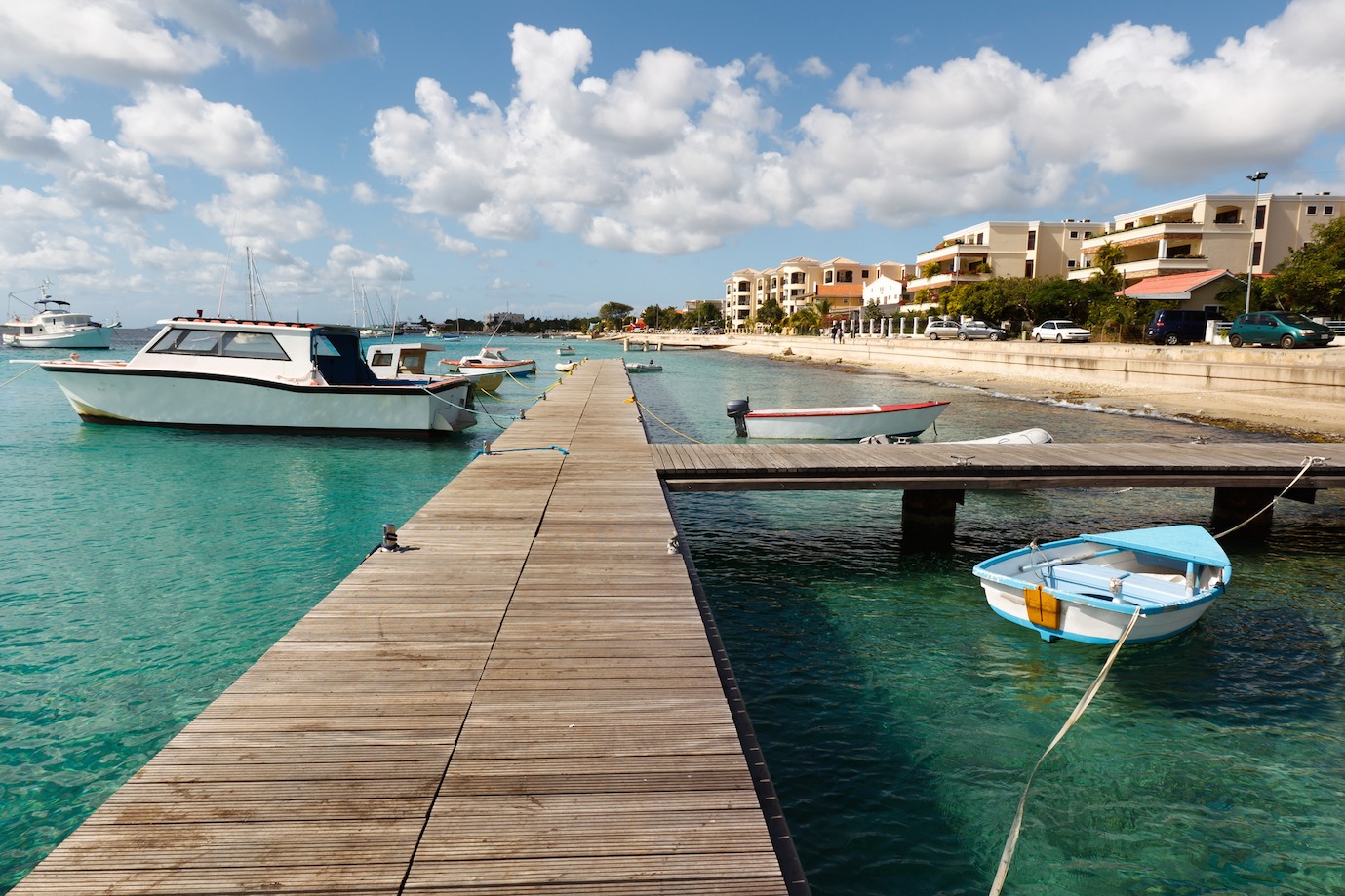
On an island with some of the world’s most breathtaking coasts and coral reefs, it’s no surprise that residents of Bonaire drive around with license plates proclaiming it’s a “Diver’s Paradise.”
Tourists flock to the Caribbean island of Bonaire throughout the year to enjoy perfect diving and snorkeling conditions found along the coasts, in addition to the world-class windsurfing and boating opportunities. Inland, this Dutch municipality offers spectacular landscapes, which can be traversed on foot, horseback or bicycle. An impressive array of wildlife inhabits the area, including a large flamingo population and more than 190 species of birds.
Healthy portions of hospitality are served up around Bonaire, and despite its small size, a vast array of accommodation options can be found. Most of the hotels and guesthouses tend to be affiliated with diving schools and are fairly small, however, a number of high-end resorts have been springing up in recent years to cater to increasing numbers of tourists. The island is surprisingly renowned for its diverse cuisine, which is based on soups, stews and fish, in addition to Argentine, Italian and Chinese dishes. Most restaurants close for a few hours during the day for a siesta.
Although the island is world-famous for its spectacular diving and snorkeling, Bonaire has much more to offer. Day trips are popular and include excursions to the National Park, kayaking through the mangroves and land sailing on the world’s longest track. There are also some enthralling walking tours, particularly in the quaint and historic towns of Rincon, the oldest village in Bonaire, and the capital, Kralendijk.
The most efficient way to traverse the island is on four wheels and it is possible to ship a car to Bonaire. However, it is much easier to rent one from the airport or your hotel. The island has also experienced a steady increase in its taxis over recent years, primarily due to Bonaire’s growing popularity as a cruise port. An informal bus service, using vans, runs daily between the larger destinations, in addition to a few medium sized tour buses.
Highlights
- Dive off the coast to exploring some of the world’s best reefs and corals.
- Go windsurfing in the choppy waters of Lac Bay, located in an 11 mile lagoon which offers perfect conditions.
- Hike the bucolic Washington-Slagbaai National Park, which is home to a plethora of wildlife including turtles, iguanas and birds of paradise.
- Stroll through the quaint capital, Kralendijk, taking in the sights, stopping for a drink and shopping for souvenirs.
- Sail from the Bay of Kralendijk in the early evening to enjoy a fantastic sunset.
- Visit the Lourdes Grotto shrine for a quiet moment of reflection.
- Gamble on the beach at the Caribbean’s only barefoot casino at the Divi Flamingo Beach Hotel.