
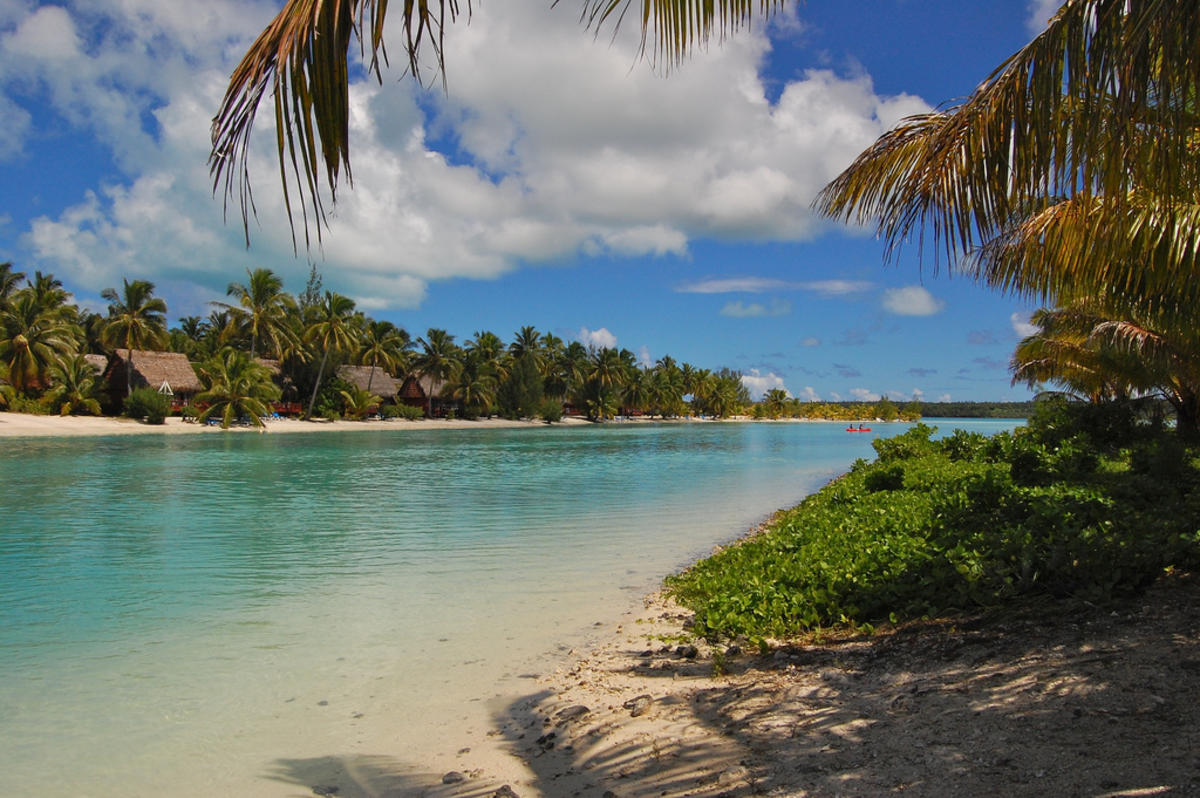
Immune to the usual tourism hype, the Cook Islands deserve the title of the “best kept secret in the Pacific.” Located halfway between Hawaii and New Zealand, they lie in the heart of enchanting Polynesia. 15 sandy enclaves, the Cook Islands are pure seclusion and a remote escape for paradise-seekers. Fringed by some of the most captivating beaches on the planet, these islands are the perfect hideout from the manic pace of the urban world.
Lapped by the seductive waters of the Pacific, the Cook Islands create a paradise that combine hypnotizing natural attractions with an idyllic climate and a rich Polynesian culture preserved by some of the friendliest and warmest people you’ll ever meet. The natives welcome outsiders with a smile and willingly allowing visitors to partake in the riches of their homeland and their thousand-year-old culture.
Rarotonga, the largest jewel of the Cook Islands, attracts the most guests with a mix of fine beaches, jungle and rugged mountains. While Rarotonga can single-handedly provide you an adventure-filled and memorable holiday, the other islands are also worth a wander. Aitutaki, for example, is notable for what’s “down below.” Under its hook-shaped landmass lies a vast coral lagoon filled with mesmerizing marine creatures from giant clams to all kinds of tropical fish.
Sprawling jungles, glorious beaches, underwater wonders, mystifying uninhabited islets, and a fascinating culture await travelers to the Cook Islands. Atiu’s limestone caves and fragrant coffee plantations — along with the traditional villages on the islands of Mangala, Mau’ke and Mitiaro and the black pearl fields of Manihiki and Penrhyn — are just some of the must-see attractions.
It is very easy to find a quiet hideaway on any of the Cook Islands, many of which are practically unpopulated. The larger atolls like Rarotonga offer a mix of resorts, villas, hotels, bungalows, and a number of self-catering apartments that are steadily improving in terms of amenities and service to match the growing number of visitors. If you are looking for a beachside setting with scenic views, the options are endless as long as you book in advance. Whether you want an extravagant resort-style hotel or a more laid-back backpacker’s lodge, plan ahead because the secret is slowly getting out. Unfortunately, camping is unheard of, and pitching a tent on the beach is not allowed.
Rarotonga International Airport serves as the main gateway to the Cook Islands. Weekly direct flights arrive from Los Angeles, as well as other popular hubs like Fiji and Sydney, and there are daily connections to Auckland. Getting around the main islands is easy with plenty of taxis, car rentals, motor scooters, and bikes. Ferries to the more remote islands are reserved for the most intrepid travelers, as services can be weeks apart. Inter-island flights between Rarotonga and Aitutaki and others are available to serve curious island hoppers.
Highlights
- Walk the Rarotonga trails laden with ancestral war paths, mountainous landscapes and reefs
- Take a pony trek to the site of the stunning Wigmore’s Waterfall (Papua Waterfall)
- Go game fishing offshore around Aitutaki
- Scuba dive to discover the underwater caves, canyons and deep ocean drops of spectacular dive sites like Papua Canyon, the Mataora Wreck and many more
- Whale watch during humpback season
- Embark on a boat tour or snorkel around the islands
- Visit sacred Marae sites
- Admire historic palaces and mission houses in Avarua
- Enjoy a scenic drive across the Avatiu and Takuvaine valleys